Who Is Usha Sobhraj
Usha Sobhraj, also known as Usha Sutliff, is the daughter of Charles Sobhraj and Chantal Compagnon. Born in Bombay, India, in 1970, she entered the world at the beginning of a turbulent chapter in her parents’ lives. Her father would later become one of the most notorious criminals associated with the 1970s Asian hippie trail, while her mother struggled to build a life away from the instability surrounding him.
What makes Usha’s story unusual is not simply her connection to Charles Sobhraj. It is the distance she deliberately created from that connection.
Rather than becoming part of the public mythology surrounding her father, Usha built a professional life centered on security, law enforcement, counter-terrorism, intelligence, homeland security, and cybersecurity in the United States. Her career stands in striking contrast to the criminal world associated with her biological father.
Usha has generally avoided interviews, publicity, and public discussion of her family history. Her name periodically returns to the spotlight when new films, television series, documentaries, and articles revisit Charles Sobhraj’s crimes, but she has consistently remained on the other side of that spotlight.
Charles Sobhraj and His Daughter
Charles Sobhraj was born in 1944 in Saigon, then part of French Indochina. His birth name is commonly given as Hotchand Bhawnani Gurmukh Sobhraj, although variations of his name appear in different accounts. He later became known by several nicknames, including “The Serpent” and “The Bikini Killer.”
His criminal career involved fraud, theft, deception, drugging, and murder. During the 1970s, he moved across several countries in Asia and became associated with crimes targeting Western travelers. His ability to manipulate identities and cross borders made him an especially elusive figure.
Usha’s relationship with him was almost nonexistent. She was still an infant when her parents’ relationship collapsed, and she spent much of her childhood separated from her biological father.
Around 1973, Sobhraj briefly took Usha from the care of her maternal grandparents in France. The episode occurred during a period when he was moving between countries and attempting to evade authorities. Accounts describe him drugging Usha’s grandmother before taking the child and traveling toward Iran. He was eventually arrested there, and Usha was recovered and returned to her family.
The incident became one of the most disturbing episodes in the history of Sobhraj’s family life. For Usha, however, it was an event from infancy rather than the foundation of a relationship with her father.
By the time she was around eight years old, she reportedly learned the truth about her biological father. She showed little interest in developing a relationship with him. As an adult, she maintained that separation.
Chantal Compagnon and the Breakdown of the Family
Chantal Compagnon was born into a conservative Catholic Parisian family and met Sobhraj when they were young adults. Despite her family’s reservations, she married him around 1969.
Their marriage quickly became entangled with Sobhraj’s criminal activities and unstable lifestyle. The couple traveled extensively, faced arrests, and became involved in circumstances that made ordinary family life almost impossible.
After events in Kabul, Afghanistan, the marriage deteriorated. Chantal eventually returned to France and arranged for young Usha to remain with her parents. The separation from Sobhraj became permanent.
Chantal later married Leon Harris in 1975. She eventually built a new life in the United States and had another daughter with Harris.
Usha ultimately distanced herself from her biological mother as well. Her decision appears to have been part of a broader effort to separate her adult life from the complicated history surrounding her parents.
Leon Harris and Usha’s New Family
One of the most significant people in Usha’s early years was Leon Harris. He was visiting a buddy in Kabul when he met Chantal, who was incarcerated as a woman. Later, in 1975, the two got married.
By adopting Usha, Harris helped her start a new life away from the global turmoil surrounding Sobhraj and gave her a new family structure.
In the end, the family made Litchfield, Connecticut, their home. Instead of growing up in the criminal world connected to her biological father, Usha was raised in a suburban American setting there.
Harris has occasionally discussed Usha in public, especially after Sobhraj came back into the spotlight. According to his descriptions, she is intelligent, private, strong-willed, and determined to live her own life.
Additionally, he has highlighted the secrecy surrounding certain facets of her career. The family’s need for secrecy was further reinforced by the fact that her work in government and security required duties that were inappropriate for public debate.
Sandrine and the Harris Family
Usha has a younger half-sister named Sandrine, born to Chantal and Leon Harris after their marriage.
Very little reliable information about Sandrine is publicly available, which fits the family’s broader approach to privacy. She has largely remained outside the media narrative surrounding Charles Sobhraj.
The distinction between Usha and Sandrine is important. Although both are connected to Sobhraj through Chantal, neither appears to have embraced the public fascination with his criminal history.
When television and documentary producers revisited Sobhraj’s story, members of the Harris family were reportedly approached for participation. The family generally declined to become involved.
Usha Sobhraj’s Education and Early Career
Usha attended Boston University, where she developed an independent professional identity. Before entering the security field, she worked as a print journalist.
Journalism may have provided a natural bridge into her later work. It required research, careful examination of information, attention to detail, and the ability to understand complicated events.
Her professional path eventually moved toward public safety and national security. Instead of investigating criminals as a journalist, she became involved in institutions dedicated to preventing and responding to serious threats.
This transformation is one of the most striking features of her biography. Her father became famous for crossing legal boundaries, while his daughter built a career concerned with defending those boundaries.
Career in Counter Terrorism and Homeland Security
Usha’s professional background has included work in law enforcement, counter-terrorism, criminal intelligence, homeland security, and cybersecurity.
She was associated with the Center for Policing Terrorism at the Manhattan Institute for Policy Research and was seconded to the Los Angeles Police Department’s Counter-Terrorism and Criminal Intelligence Bureau.
She also became a member of the LAPD Reserve Program in 2007.
Around 2008, she joined the Lafayette Group, a government consulting organization. Her professional profile highlighted expertise connected to homeland security, counter-terrorism, law enforcement, intelligence, and related security disciplines.
Some descriptions of her later government work characterize it as classified or highly sensitive. That naturally limits the amount of information available about her responsibilities, projects, and achievements.
Her career is therefore partly visible and partly hidden behind a closed door. The public can see the broad outline, but not necessarily the details.
Usha Sobhraj and Her Life in California
Usha eventually established her life in Southern California. She married Jason Sutliff, a fire captain associated with San Marino, California.
Together they have a family, and Usha is known to be a mother of one. Details about her child have generally remained private.
The family has been described in coverage as living an ordinary American life despite the extraordinary history attached to Usha’s surname.
That contrast is central to understanding her story. Her father became the subject of books, documentaries, television dramas, and international headlines. Usha, meanwhile, appears to have chosen family life, professional responsibility, and privacy.
The 1973 Kidnapping of Usha
The kidnapping episode of 1973 remains one of the most dramatic moments connecting Usha directly to her father.
At the time, Sobhraj’s relationship with Chantal had collapsed. Their life had already been marked by arrests, financial problems, deception, and international travel.
Usha was being cared for by her maternal grandparents in France. After escaping custody in Afghanistan, Sobhraj eventually reached France and located his daughter.
He reportedly drugged Usha’s grandmother and took the child. He then traveled with the infant toward Iran.
The journey ended when Sobhraj was arrested at a casino. Usha was recovered and eventually returned to her family.
The incident lasted only a short time, but its significance was enormous. It became one of the last major intersections between Usha’s childhood and her father’s criminal life.
Afterward, Chantal continued rebuilding her life. Leon Harris entered the family, adopted Usha, and helped establish the stable environment in which she grew up.
Usha’s Paternal Grandfather Sobhraj Hatchard Bavani
Usha’s paternal grandfather was Sobhraj Hatchard Bavani, with his name appearing in several variations in historical accounts.
He was an Indian businessman of Sindhi background associated with Saigon and the wider Bombay and Pune region. His activities reportedly included clothing, tailoring, and money-lending.
His relationship with Charles’s mother was complicated, and Charles experienced difficulties surrounding his paternity and identity during childhood.
The relationship between father and son remained strained. Their contact was sporadic, although Bavani reportedly provided assistance at certain points in Charles’s life.
For Usha, this paternal branch of the family represents another part of a history she has largely chosen to leave behind.
Usha’s Paternal Grandmother Tran Loang Phun
Tran Loang Phun, also known as Tran Loan Phung, was Usha’s paternal grandmother.
She later wed a French military officer despite being Vietnamese. Due to military deployments, the family relocated between several nations, including Senegal, Vietnam, and France.
These complex familial dynamics and relationships impacted Charles’s early years. His early encounters with instability, identity, and belonging shaped his subsequent life.
André, one of Charles’s half-brothers, would eventually get involved with the criminal underworld.
The major reason these family information are important to Usha’s biography is because they clarify the complex ancestry of her last name. These do not prove that Usha inherited her father’s traits or aspirations.
The Contrast Between Father and Daughter
The story of Usha Sobhraj is often presented as a dramatic contrast.
Charles Sobhraj became associated with deception, criminal schemes, international escapes, and murder. Usha entered fields devoted to security, intelligence, public safety, and counter-terrorism.
Her professional direction seems almost like an answer to the history she inherited.
She did not publicly embrace the notoriety attached to her father. Instead, she built a career in institutions where secrecy, discipline, investigation, and protection are fundamental.
This does not make her father’s crimes disappear. It does, however, make clear that a family connection does not dictate an individual’s identity.
The Serpent and Renewed Public Attention
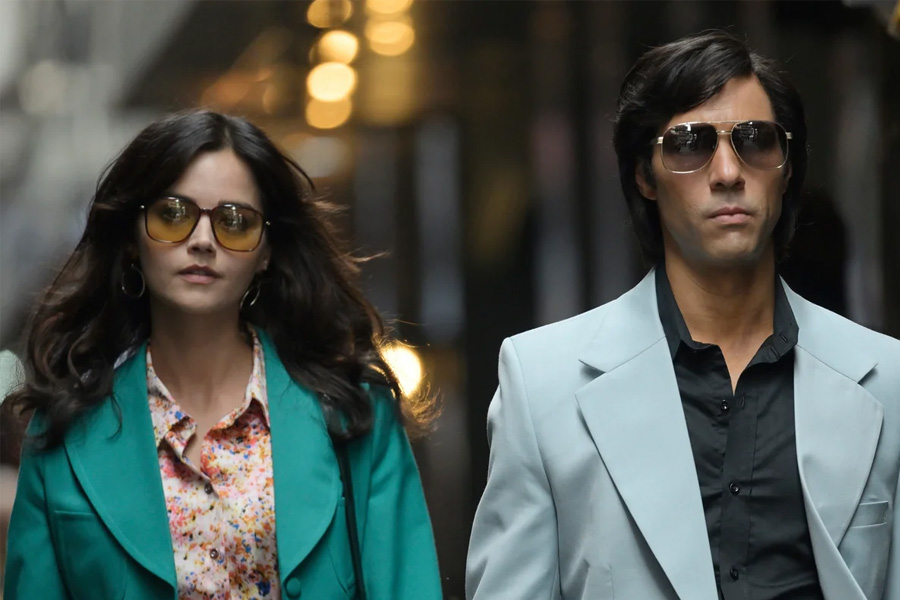
The 2021 television series The Serpent brought renewed international attention to Charles Sobhraj and, indirectly, to Usha.
The production revived interest in his crimes and personal history, prompting journalists to search for information about the daughter who had chosen not to participate.
Later documentaries and media projects continued the pattern. Coverage in 2024 and 2025 again focused on the contrast between Sobhraj’s criminal past and Usha’s career in American security.
The Netflix project Black Warrant also contributed to renewed public interest in stories connected to notorious criminals and the prison system.
Usha’s position remained consistent. She was not seeking the spotlight.
Charles Sobhraj’s Later Years
Sobhraj was imprisoned for years in several nations. His most notable subsequent incarceration was in Nepal after he was found guilty of killings in the 1970s.
After decades in prison, Nepal freed him on health grounds in December 2022.
His release made headlines throughout the world and sparked new conversations about his crimes, victims, and family.
However, Usha showed no signs of a rekindled romance. One aspect of her adult life that continued to define her was the divide between her father and daughter.
Usha Sobhraj’s Financial and Public Status
There is no reliable public record establishing Usha’s personal net worth, detailed assets, salary, or investment portfolio.
Her career suggests a stable professional life in government consulting, homeland security, law enforcement, and related fields. Her marriage to a fire captain also places her within a conventional professional household rather than the world of celebrity wealth.
Claims about precise wealth figures should therefore be treated cautiously.
Her most notable distinction is not financial. It is the unusual path she took after growing up with a notorious criminal as her biological father.
Frequently Asked Questions
Who is Usha Sobhraj?
Usha Sobhraj, also known as Usha Sutliff, is the daughter of Charles Sobhraj and Chantal Compagnon. Born in Bombay in 1970, she later moved to the United States and developed a career in homeland security, counter-terrorism, law enforcement, intelligence, and cybersecurity.
Is Usha Sobhraj related to Charles Sobhraj?
Yes. Charles Sobhraj is her biological father. Their relationship has been largely nonexistent since Usha’s infancy, and she has deliberately maintained distance from his criminal history.
What happened to Usha when she was a baby?
In 1973, Charles Sobhraj reportedly took infant Usha from the care of her maternal grandparents in France after drugging her grandmother. He traveled with her toward Iran but was arrested, after which Usha was recovered and returned to her family.
Who raised Usha Sobhraj?
After her parents separated, Usha was raised primarily within the family formed by her mother, Chantal Compagnon, and Leon Harris. Harris married Chantal in 1975 and adopted Usha. The family later settled in Litchfield, Connecticut.
Who is Usha Sobhraj’s adoptive father?
Her adoptive father is Leon Harris. He married Chantal Compagnon in 1975 and adopted Usha. Harris has occasionally discussed Usha’s private life and professional career when journalists have revisited Charles Sobhraj’s story.
Does Usha Sobhraj have siblings?
Yes. She has a younger maternal half-sister named Sandrine, born to Chantal Compagnon and Leon Harris. Public information about Sandrine is limited.
What does Usha Sobhraj do for a living?
Usha has worked in homeland security, counter-terrorism, intelligence, law enforcement, criminal intelligence, and cybersecurity. Her career has included work connected with the Manhattan Institute, the LAPD Reserve Program, the Lafayette Group, and U.S. government security activities.
Did Usha work for the LAPD?
Usha was a member of the LAPD Reserve Program beginning in 2007 and was also associated with the LAPD’s Counter-Terrorism and Criminal Intelligence Bureau through her professional work.
Where does Usha Sobhraj live?
Usha has been associated with the Los Angeles metropolitan area and San Marino, California. She has maintained a private lifestyle, so detailed information about her residence and daily life is not widely available.
Is Usha Sobhraj married?
Yes. She is married to Jason Sutliff, who has been described as a fire captain in San Marino, California.
Does Usha Sobhraj have children?
Yes. She is a mother of one, although publicly available information about her child is limited.
Has Usha spoken publicly about Charles Sobhraj?
Usha has largely avoided public discussion of her biological father. Her reluctance to participate in media projects about him appears to reflect her long-standing desire to keep her personal and professional life separate from his criminal legacy.
What happened to Charles Sobhraj in 2022?
Charles Sobhraj was released from prison in Nepal in December 2022 on health grounds after spending many years incarcerated.
Why is Usha Sobhraj’s story unusual?
Her story is unusual because she built a career dedicated to security and public protection while being the daughter of a man internationally known for criminal activity. Instead of capitalizing on that connection, she chose privacy and constructed an independent professional identity.